Is your site review as good as you think?

Pro-Demnity’s Risk Services Department, staffed by experienced architects, has seen a thing or two over the years in its involvement with claims against architects. And it’s hard to unsee them. Although new claims cross our desks every week, we have observed that quite a few are due to the same types of common mistakes as they were five, ten or perhaps even thirty years ago. Most of these are easily avoidable if one follows some basic tips.

We’re speaking specifically about claims related to construction phase services, most particularly, site reviews. Site review is arguably an area in which the greatest liability exists for architects. It’s also an area where improving one’s process and approach, could prevent claims, or at the very least, ensure that you will be better defended by Pro-Demnity against claims that may arise.

Many of these tips may seem obvious to most architects but, keep in mind, they have been gleaned from actual claims we’ve handled.

Twelve Tips to improve your site review and decrease claims:

  1. It may go without saying that you should charge a sufficient fee to allow you to perform thorough professional services with diligence and without cutting corners. Most architects do. Pro-Demnity takes note of those that don’t.
  2. Only do what you’re contracted to do; do it fully, or not at all. If not contracted to perform a service – don’t “dabble” in it. There is no such thing as “partial” site review. For example, if you are not retained to perform site review, do not step foot on the site during the construction phase for any reason. If you do, it may be deemed by the Courts that you were, in fact performing site review, despite what your agreement states. When retained to do site review, be professional and carry out as complete and thorough performance of your services possible in accordance with your agreements.
  3. Document every direction, warning or notice you provide to your client, contractor, or anyone else during a project. If someone says or does something that you feel does not appear correct, do not let it slide. Oral advice only becomes valuable when put in writing.
  4. Make sure your site reviewer is experienced and intimately familiar with the requirements of the contract documents and applicable Codes. Do not send the most junior member of your firm to perform site review.  Remember this is an area where massive liability exists for architects.  Be comprehensive in noting deficiencies and make sure to follow-up on outstanding items.
  5. Do not feel pressured to side with your client or contractor in making interpretations of the documents, evaluations on site or in making certifications. You have a duty as a professional to be impartial. If you are feeling pressure and require support, feel free to have a discussion with someone in Pro-Demnity’s Risk Services Department.
  6. Be extremely careful in considering proposed substitutions and properly evaluate how any such change will impact performance and durability. Ensure your client understands the pros and cons and signs off on it. It goes without saying that inferior products, although accompanied by a desired credit, may be detrimental to the project down the road, which may leave you vulnerable to a claim.
  7. Always insist upon and follow up in obtaining a certificate of insurance from your engineering consultants and ensure that their limit per claim equals or exceeds yours. Do not agree to limiting their liability in your agreements with engineers without consulting with us. Otherwise, you may be on the hook contractually for any shortfall caused by an engineer’s errors, omissions, or negligent acts.
  8. When receiving reports from your engineering consultants, do not edit, re-write or “put in your own words” the recommendations in their reports, replies to RFI’s or other directions provided. Architects sometimes tend to do this in their cover letters. Stick to your own discipline and do not second-guess, embellish or try to simplify the advice of your consultants.
  9. Do not confuse your role as a contract administrator with that of a lawyer. For example, when asked whether a delinquent contractor is in “default” of its contract, this may constitute legal advice, which you are not qualified to provide. Rather, restrict your advice to supplying your client with factual information on the performance (or lack of) of the contractor and request that it consult with its legal counsel to make a determination of whether the level of performance or non-performance of a contrac,t as indicated by you, constitutes sufficient basis to determine whether a contractor has defaulted on its contract.
  10. Be cognizant of your limitations. Most architects are not a code experts, building science experts, engineers, lawyers, or delay consultants. When you feel out of your depth, do not feel uneasy in advising that something is beyond your expertise. If warranted, retain the appropriate consultant to assist you or recommend that your client engage them.
  11. Keep a chronological log of all submissions and re-submissions to contractors. Delay claims continue to plague the construction industry and are a source of claims against architects. One of the common allegations levelled against architects in such situations, whether true or not, is that the architect and its consultants contributed to delay due to late response times. One way to defend against this is to create a record documenting your responses times showing that they were made in a timely fashion.
  12. If you find things may be heading off the rails or when in doubt, feel free to contact Pro-Demnity’s Risk Services team for support and guidance. Our services are part of your annual professional liability premium, and we are here for you to help you to better manage risk in your firm.

While site review may at times appear to be a minefield of risks, it also happens to be a great opportunity for architects to showcase their diligence and professionalism toward bringing their projects to successful completion.

For more personalized architectural practice risk management guidance, you may request a complimentary and confidential meeting to Speak with an Expert, or Report a Claim.


Our Contributor

Salvador Knafo, OAA, MRAIC, leads Pro-Demnity’s in-house architectural team and provides an architect‘s perspective across all facets of the company, working with leadership, stakeholders, claim specialists, legal counsel and of course, directly with Ontario’s Certificate of Practice holders and their architects. Sal’s breadth of experience includes having worked in professional liability claims with architects, construction dispute, as well as interacting with insurance underwriters in product development and other initiatives within the Company. Most importantly, Sal passionately services the profession of Architecture by providing consultation to architects on avoiding liability and minimizing risk. He is a licensed Ontario architect with over 30 years’ experience at Pro-Demnity (previously the OAA Indemnity Plan).
Embrace E-Payments. Cheques being phased out in 2024.

Pro-Demnity is encouraging clients to move to electronic payments throughout 2023, upon renewal. The ability to pay by cheque will be phased out before the end of 2024.

Premium and deductible payments can be made by:

  1. On-line payments through a bank or credit union
  2. Electronic Funds transfers (EFT)
  3. Pre-authorized Debit (PAD)

Electronic payment is secure, private, while protecting your banking information, and easy to set up through your bank or credit union. More importantly, it ensures that your professional liability insurance and policy coverage doesn’t risk being cancelled. Setting up E-payment also helps to prioritize the professional liability obligations required of your architectural practice.

Please transition to E-payments for your professional liability insurance premiums as soon as possible, or upon your next renewal. Please see Payment Options for instructions on the E-payment types noted above.

We are actively exploring opportunities to introduce more digital and online payment options in the future to make it even easier for clients.

In the meantime, and effective July 5, 2023, through to the end of 2024, when cheque payments will be phased out, please follow the new cheque-handling process if you are still making cheque payments: 

Send ONLY CHEQUE PAYMENTS via Canada Post to our secure Lockbox:

PRO-DEMNITY INSURANCE COMPANY T/A P/D UNDERWRITING
C/O TX4152C
PO BOX 4621, STN A
TORONTO, ON M5W 0K2

In the envelope, you must include:

1. a copy of your invoice

2. the cheque, with invoice number and policy number noted on the cheque(s).

Please do not send any other documents to this address, other than cheques. All other correspondence should be mailed to our business/street address noted on our website.


Pro-Demnity’s 2023 OAA Conference Materials

Pro-Demnity is proud to sponsor the 2023 OAA Conference in Sudbury, Ontario, and support the architectural profession in its pursuit of Designing for Dignity.

Our conference resources provide you with the latest tools and knowledge to help you and your firm navigate risk in a wise, efficient and effective manner.

Visit us in person at our booth or attend our two Continuing Education sessions:

IPD and the Architect. CE8 – June 21 – 1 pm -2:30 pm2023 Conference Program Detail – IPD and the Architect: Challenges and Opportunities (oaa.on.ca)

Not in the Plans: Architects, Risk, and Personal Injury Lawsuits. CE27 – June 22 – 10:30 am – 12 noon: 2023 Conference Program Detail – Not in the Plans: Architects, Risk, and Personal Injury Lawsuits (oaa.on.ca)

Resources

Designing for Dignity is a Risk Management Strategy. Co-authored by Leslie Parker, Architect and Iliana Arapis, VP Marketing.

CE8: IPD and the Architect Presentation
Moderated by: John Hackett, VP Practice Risk Management
Presenters: Bill Lett, Geza Banfai, Phil Ghosh

CE27: Not in the Plans: Architects, Risk, and Personal Injury Lawsuits Presentation
Moderated by: Sal Knafo, Lead Architect
Presenters: Phil Ghosh, Senior Legal Counsel; Leslie Parker, Architect

To download any of the following resources, click on the ellipses embedded with the resource shown and select “Download PDF File”.


Professional Liability Insurance of Former Lic.Tech.OAA Certificate of Practice Policyholders

Pro-Demnity is proactively and confidentially contacting former Lic.Tech.OAA Certificate of Practice policyholders to provide relevant information regarding the impact to their professional liability insurance coverage, further to the outcome of the Association of Architectural Technologists of Ontario (AATO) Court Application on May 10, 2023. 

Pro-Demnity is committed to supporting current and former policyholders experiencing transformations in their business and by extension to their professional liability needs, as well as continuing to provide valued risk management guidance to help ease their transition.

If you are impacted by this change, additional information will be provided to you directly via email.

Related Links: 

News & Insights – Regulatory Notice: More Information Related to the AATO Court Application Outcome (oaa.on.ca)


Rates, Inflation and Premiums

Over these last many years, Pro-Demnity has consistently shared that the costs it faces continue to climb. Several trends over the last 10 years have increased architects’ exposure over longer periods of time, and we anticipate these trends to persist into the foreseeable future.

As a reminder, your professional liability program serves two purposes:

  1. To protect you, our policyholder. As the architects’ professional, trusted ally, Pro-Demnity guarantees that we will protect and defend architects in accordance with their respective insurance policies. To do so, we need to ensure we maintain the fiscal strength and capacity to meet these requirements.
  2. As a wholly owned subsidiary of the OAA, we were created to re-assure the public that architectural firms have the financial resources, through their insurance policy, to fulfill their duty of care to clients and society when there are allegations of error, omission or negligence.

By being fiscally responsible, diligent in our governance and helpful in our service to you, Pro-Demnity is upholding our promise to provide architectural practices with an alliance for protection.

2022 Fiscal Summary: Context for 2023 Rates

Pro-Demnity depends upon its capital base to fulfil its fiduciary obligations and to ensure it has the resources to honour the promise we make when we issue our policies: to protect and defend architects against claims and allegations made against them. Although we are not a profit-maximizing company, we must generate sufficient capital to ensure financial strength and viability.

To improve our capital position, we look to a combination of increasing revenues and controlling expenses. We’ve been working proactively to control our costs and keep the non-claims portion of operating expenses growing slower than our revenues. In addition, we have also been resolute in controlling claims costs, using internal lawyers and improved processes to do so.

In many ways, we had a strong operational year in 2022, the first in a decade, however, our capital grew by only $585,000. This is not a sustainable level of capital growth considering current economic, market and financial conditions. Unprecedented volatility in the investment market diminished operational profits and lessened our overall net income. The impact of the volatile investment market to the business would have been dramatically worse, had Pro-Demnity not begun its efforts toward operational stability.

To ensure we have sufficient capital – including dealing with levels of inflation that have not been seen for decades, our traditional rate increases will not be sufficient.

For 2023 we will:

  1. increase rates by 5% to address expected increases in operating and claims costs; and,
  2. implement an inflationary increase of up to 4% to what we expect to be a temporary impact of inflation.

We are taking this two-pronged approach to ensure that the temporary impact of a high inflation environment does not get calculated into our current base rates that will become the foundation of future rates.

Rate increase remains steady at 5%

For 2023 Pro-Demnity is keeping the rate increase at 5%, consistent with that of the last four years. This predictable increase enables architects to budget, plan and forecast with greater confidence and reliability. The rate covers normal increases to running our business, including both claims and operating expenses, is inclusive of typical inflation, and is validated annually.

Additional inflation adjustment of up to 4%

While inflation remains volatile and well above typical levels, we are introducing an inflation adjustment of up to 4%, applied to reported fees in the calculation of premiums for the 2023-2024 underwriting year, to better match our basis of premium calculation with our expected claims costs in the future, arising from past work. Assuming no change in average fees, most firms will experience an up to 9% premium increase upon renewal inclusive of both the rate increase and inflation adjustment.

Calculating Premium – a transparent, equitable formula

Understanding how your professional liability insurance premium is calculated can help you to manage your business and plan or forecast with greater confidence.

The formula is very simple and is applied equitably across all architectural practices.

As an illustration only, imagine a practice had annual reported fees of $200,000, and purchased the minimum mandatory coverage of $250,000. Assume that there have been the same fees earned each of the past four years.

Fees reported for 2020 renewal:  $200,000
Fees reported for 2021 renewal:                                  $200,000
Fees reported for 2022 renewal:                                  $200,000
Fees reported for 2023 renewal:                                                                  $200,000


3-year average revenue (2020 – 2022): $200,000
3-year average revenue (2021 – 2023):                        $200,000

Last Year (2022):

Premium = rate x 3-year revenue (i.e., Gross Fees) average.

For simplicity, assume that the rate charged for this practice in 2022 was exactly 4.0%.  This means they would have paid [(3-year average fees) x (rate)] = $200,000 x 4% = $8,000.00 as a premium in 2022.

For example, if 3-year average revenue increases by 5% and the rate increases by 5%, the premium increase will be 10.25%, all else being equal.

This Year (2023) with inflation adjustment:

This year’s formula is: Premium = rate x inflation adjustment x 3-year revenue (i.e., Gross Fees) average.

In 2023, the rate will increase by 5%, so it is now (4.0 x 1.05) = 4.2%. The three-year average fees will have a 4% inflationary factor applied, so the three-year average will be ($200,000 x 1.04) = $208,000. This means they will have paid [(3-year average fees) x (rate)] = $208,000 x 4.2% = $8,736.00 as a premium in 2023. This new premium reflects our rate increase of 5% and the impact of inflation of 4%. The difference in premium between 2022 and 2023 is an increase of $736.

Should you require a more detailed explanation specific to your firm, please don’t hesitate to reach out to our Underwriting team after you’ve reviewed your renewal.

Being your ally

We take being your professional, trusted ally very seriously. No one understands the risks that architects face better than Pro-Demnity. We actively share our knowledge and expertise with you and encourage you to prioritize your ongoing education of these risks. Even if your firm has never had a claim to date, our experience suggests that no firm – no matter their size, location, length of time in business, reputation, or expertise – is immune from being named in a claim.

Pro-Demnity operates on behalf of architects, and only architects. Our unwavering commitment to Ontario’s 1,580+ architectural practices is to ensure that they, and your firm, will always be protected and defended in the event of allegations of error, omission or negligence.

We have heard from our clients that transparency regarding general rate communications is of utmost importance to you, and we genuinely hope you find the information in this update for 2023 to be of value to you.


Pro-Demnity has moved offices and we are working hybrid.

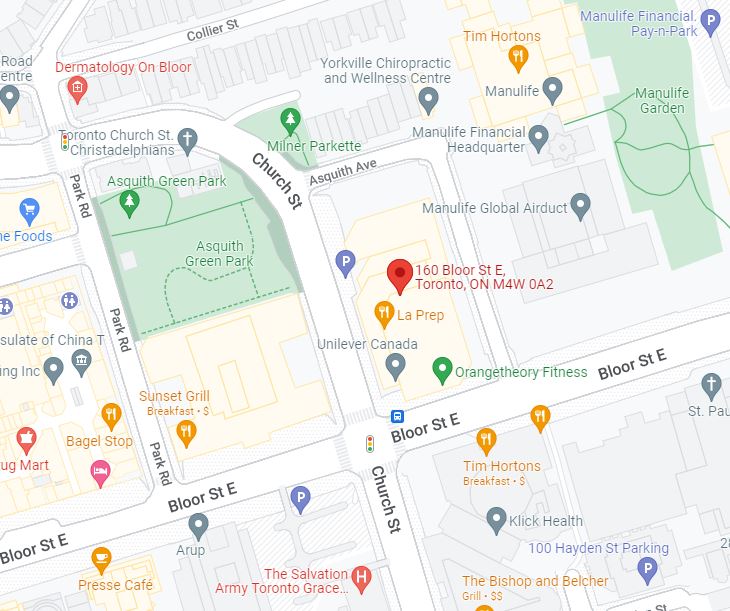
Pro-Demnity Insurance Company has moved its offices. Our new business, street and mailing address is:

160 Bloor Street East
Suite 1001
Toronto, ON M4W 1B9

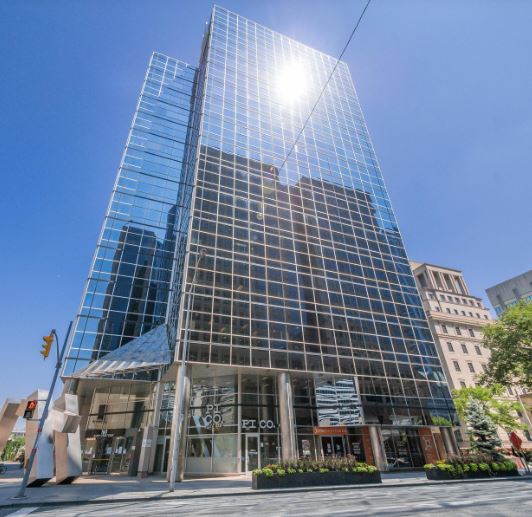
The office building, also known as the “Unilever” building, is LEED EB Gold certified, and situated on the Northeast corner of Bloor St. E. and Church St. This was first announced on September 1, 2022.

What you need to do

• Update your address books/contact lists/records on all devices. Delete the old address and use the new Bloor Street address immediately.

• Direct correspondence via couriers (I.e., Fed Ex, UPS etc.) to the new Bloor Street address.

• Please use the new Bloor Street address on all future correspondence to avoid any postal delays.

• Any courier delivery or in-person mail delivery should be left with Security on the Ground Floor.

Any other enquiries should be forwarded to:

Margarette Chan (margchan@prodemnity.com) / Tel: 437-900-0548 or
Melanie Rebello (melanier@prodemnity.com) / Tel: 437-747-4612

Only our address has changed. E-mails, phone #’s stay the same.

• All of our E-mail addresses and telephone numbers are the same, so you may reach any department or member of the team by their current business email and phone number.

We are working “hybrid”. Visitors are by appointment only.

• We are continuing to serve you during our regular business hours, however, we are working in a hybrid manner, which means that we are not always at the office. We strongly encourage booking an appointment in advance for in-person meetings.
• Video calls are preferred, and you are encouraged to request one with a member of our team.

Why has Pro-Demnity moved?

The location provides Pro-Demnity with a smaller, more modest physical footprint aligned with our hybrid work, while being TTC-accessible when we need to work in-office. The move, a result of our lease expiring in North York, supports our corporate sustainability and responsibility efforts to conduct business effectively within an existing built environment, while serving the professional liability insurance needs of our architectural clients across Ontario.

This message was first posted on September 1, 2022, and has been updated since being published.


2023 Annual Update: Protecting Practices

Protecting and defending Ontario architects is our sole business: it is all we do. Serving all 1,584 architectural firms with offices in Ontario, Pro-Demnity works as your trusted ally through our Insurance Solutions and Risk Alliance offerings of Risk Education and Risk Services.

Our Insurance Solutions products are how we fight for you when you are facing an allegation of error, omission, or negligence. Beyond mandatory minimum liability insurance needs, Pro-Demnity offers additional annual liability limits and Spike-Up coverage to help meet your protection needs and the requirements of your clients. Over the coming years, we will be updating our coverage and pricing model to ensure we fairly, appropriately charge for the risk represented by different practices, while seeking flexibility to assist you in managing your coverage.

Our Risk Alliance offerings of Risk Education and Risk Services are how we protect practices by using the learning and understanding gained from our insurance solutions and share them with your practice to improve your present and future management of risk. From our COVID-19 updates over the past few years to our upcoming Integrated Project Delivery discussion at the 2023 OAA Conference, Pro-Demnity is committed to helping practices manage real-time risk in wise, efficient, and effective ways.

At a practical level, protecting practices also means ensuring we keep the organization strong, effective, and efficient in serving you. Remaining protective of our sustainable insurance operating model, Pro-Demnity’s financial performance was solid in 2022. The organization delivered a year-end Minimum Capital Test Ratio of 248% (2021: 238%), and a Combined Operating Ratio of 86% (2021: 102%). These, along with other Key Performance Indicators throughout the Annual Update, suggest two things. The first is that efforts to strengthen operations are having an impact in the right direction, and the second, that there is more to be done to improve services and bolster fiscal capacity to comfortably respond to potential losses in future years, particularly as we all contend with significantly fluctating contruction inflation.

The Board of Directors and Management are collectively responsible for steering the organization in its implementation of strategic priorities. Through Client Centricity, Strengthened Operations, Financial Strength & Growth, and our People & Culture, we are committed to increasing our value to you.

We are sincerely thankful to you, our clients, for your confidence and trust in Pro-Demnity. Several stakeholders contribute to our success – our regulator (FSRA), our shareholder (OAA), our reinsurers (various syndicates at Lloyd’s), our auditors, actuaries and so forth – and we are fortunate for their support. We are, of course, nothing without the efforts of our employees: to all our employees, we appreciate your dedication and the care with which you are protecting practices.

Joanne McCallum, Chair, Board of Directors

Bruce H. Palmer, President and CEO

For the 2022 Financial Statements, please visit the OAA website.


Rate increase of 5% and inflation adjustment of 4% in 2023.
The rate increase for the 2023 renewal year is 5%*, with an additional up to 4% inflation adjustment in anticipation of the future costs of raw materials required for repair, remediation or reconstruction when claims occur. Assuming no change in average fees, most firms will experience an up to 9% premium increase upon renewal inclusive of both the rate increase and inflation adjustment. We understand that rate increases affect your business costs and compound the other, many rising cost inputs. Pro-Demnity is not immune from either general economic and social factors, or from the very specific factors facing architectural errors and omissions claims. We are committed to doing our part to help slow the growth in Pro-Demnity’s costs.

*Premium = rate x 3-year revenue average. For example, if 3-year average revenue increases by 5% and the rate increases by 5%, the premium increase will be 10.25%, all else being equal.


Three Reasons to Increase your Liability Limits

How do you know when it’s time to increase your liability limits? There’s no hard and fast rule, but any one of these reasons might apply to your architectural practice:

  1. Your firm is growing and you’ve increased the number of projects being undertaken.
  2. Your firm is increasingly bidding on projects whose gross value exceeds your mandatory practice insurance limits.
  3. Your firm is stretching creatively to pursue design projects beyond your current expertise and knowledge.

You may be eligible for additional coverage above the $1 million per claim level up to $40 million in aggregate, when approved by Pro-Demnity. In addition, consolidating your firm’s excess coverage with Pro-Demnity means seamless, efficient and professional claims handling that will save you aggravation, time and money in the event of a claim.

Speak with an underwriting expert to request a quote.


2022 Top Ten Risk Education Articles for Architects

With 2022 wrapping up, we’re sharing the year’s most-read risk education articles and news items.* This is our third annual list providing a round-up of what architects found interesting to read this year from their professional liability insurer.

Topping the 2022 list is the well-received List of Lawyers, referring architects to Pro-Demnity’s “go-to” lawyers for all things related to protecting a practice’s business interests. Architect’s Claims Stories podcast lays “claim” to the second spot, with four published episodes recounting the circumstances of a real claim, inspired by the 6,000+ that Pro-Demnity has defended over the years. In third place is Sorry. Not Sorry, which provides insight into The Apology Act and the potential legal and insurance implications of apologizing.

Two articles from last year’s list remained on the 2022 list. 25 things within an architect’s control jumped to 6th spot this year from 10th last year and, Navigating Risk: What Practice Leaders Do, holds the 10th spot.

  1. Lawyers available to assist architects
  2. Architects’ claims stories podcast
  3. Sorry. Not sorry
  4. Eight risk trends to watch
  5. Architects and 30.10 actions
  6. 25 things within an architect’s control
  7. Client management as a risk management strategy
  8. The architect as expert witness
  9. Limitation periods: Is an architect ever safe from litigation?
  10. Navigating Risk: What Practice Leaders Do

Most of the reads take less than 3 minutes, delivering valuable expertise to support architects in their professional roles, while providing relevant and useful solutions that help architects to manage, mitigate, avoid, transfer, or assume risk with eyes wide open.


*The rankings were driven by stakeholders including (but not limited to) architects, architectural technologists, architectural practice leaders, partners and principals, risk leaders, insurance decision-makers, policyholders and ancillary professionals (i.e., lawyers, engineers), as derived from website visits and page views from January 1, 2022 to December 4, 2022.


2022 Client Survey is now closed.

In late October, Clients were invited to participate in our 2022 Client Survey and share their perspectives on how we are doing as a trusted, professional ally for their architecture firm. The survey was open for two weeks from October 28 for 1,500+ policyholders, and two reminders were sent out.

269 clients completed the survey reflecting a 17.5 % response rate. We greatly appreciate your engagement.

At this time, the results are being analyzed. Next steps will be for the Leadership team to review the analysis and feedback that will help in our decision-making to drive further improvements to the way we do business with you and your firm. In concert with our Board of Directors who steward our strategic priorities, key activities and initiatives will be identified, actioned, and communicated with our stakeholders as we move forward.

Thank you to all who participated.

Read the 2022 Survey Announcement.